What to Expect in Your First Couples Counselling Session in Grimsby, Ontario

This article is for informational purposes only and does not constitute professional mental health advice or create a therapist-client relationship.

Booking your first couples counselling session can bring up a lot: hope, nerves, maybe even a little skepticism about whether it'll actually help. That's completely normal. Most couples who come to see us at Grimsby Counselling Centre have never done this before, and they're not entirely sure what a first couples counselling session even looks like.
Here's the short version: it's a conversation. Not a test, not a chance for one partner to "win," and not a session where your therapist takes sides. It's a structured space where both of you can start to understand the patterns you've fallen into, and what's actually needed to feel more connected again.
Whether you're dealing with communication that's broken down, a specific conflict that keeps resurfacing, major life transitions that have put strain on the relationship, or just a sense that you've drifted apart, this guide walks through what to expect in your first couples therapy session, how evidence-based therapy sessions work, and what to consider when choosing between in-person or virtual couples counselling across Ontario.
In this article, we'll cover what actually happens in your first session, who you'll be working with at Grimsby Counselling Centre, how a couples therapist helps you feel more connected again, the range of evidence-based approaches used in marriage counselling, what improving communication looks like in practice, and how to decide between in-person or virtual couples counselling. By the end, you'll know what to expect walking in, and what starting therapy together actually involves.
What Happens in Your First Couples Therapy Session
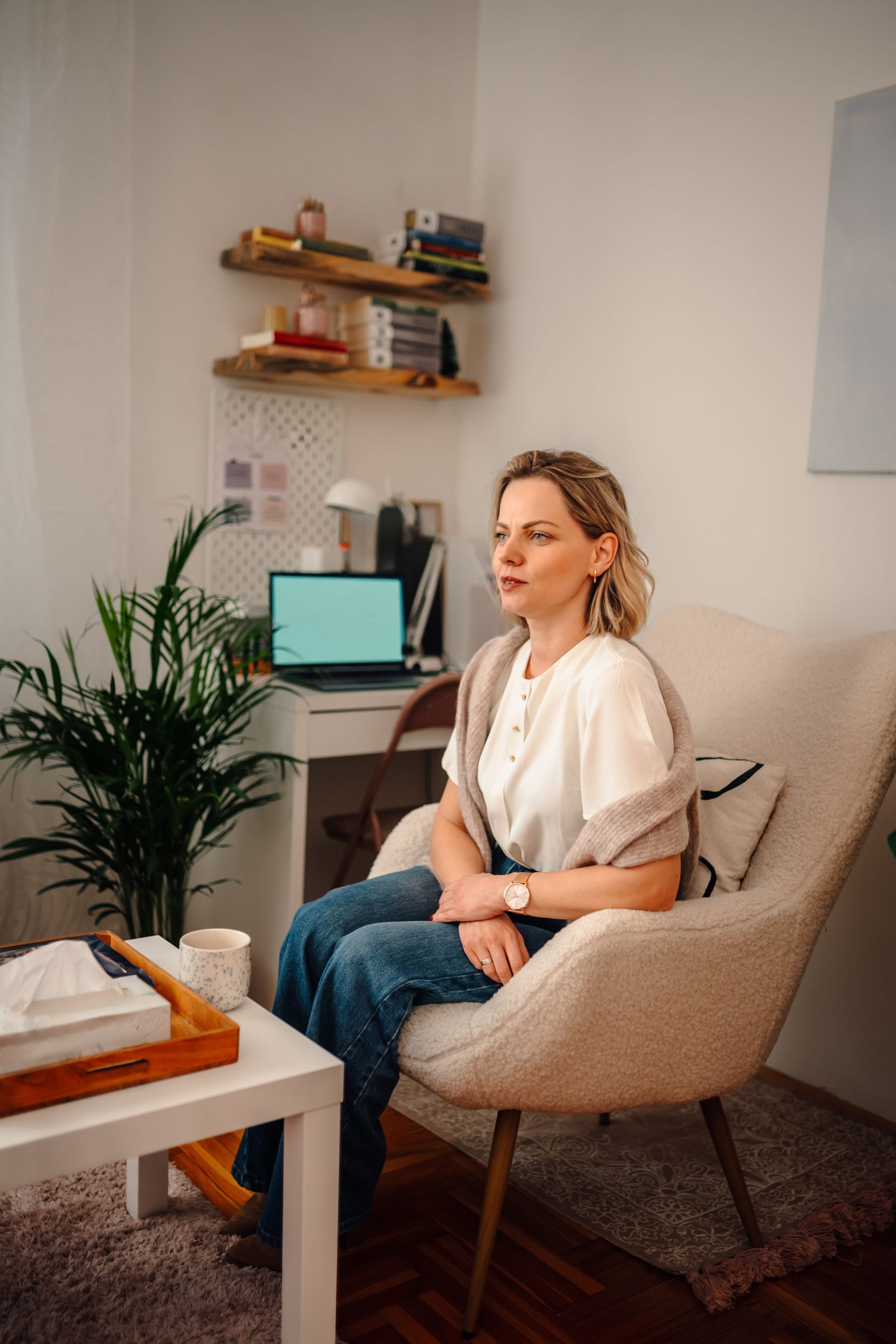
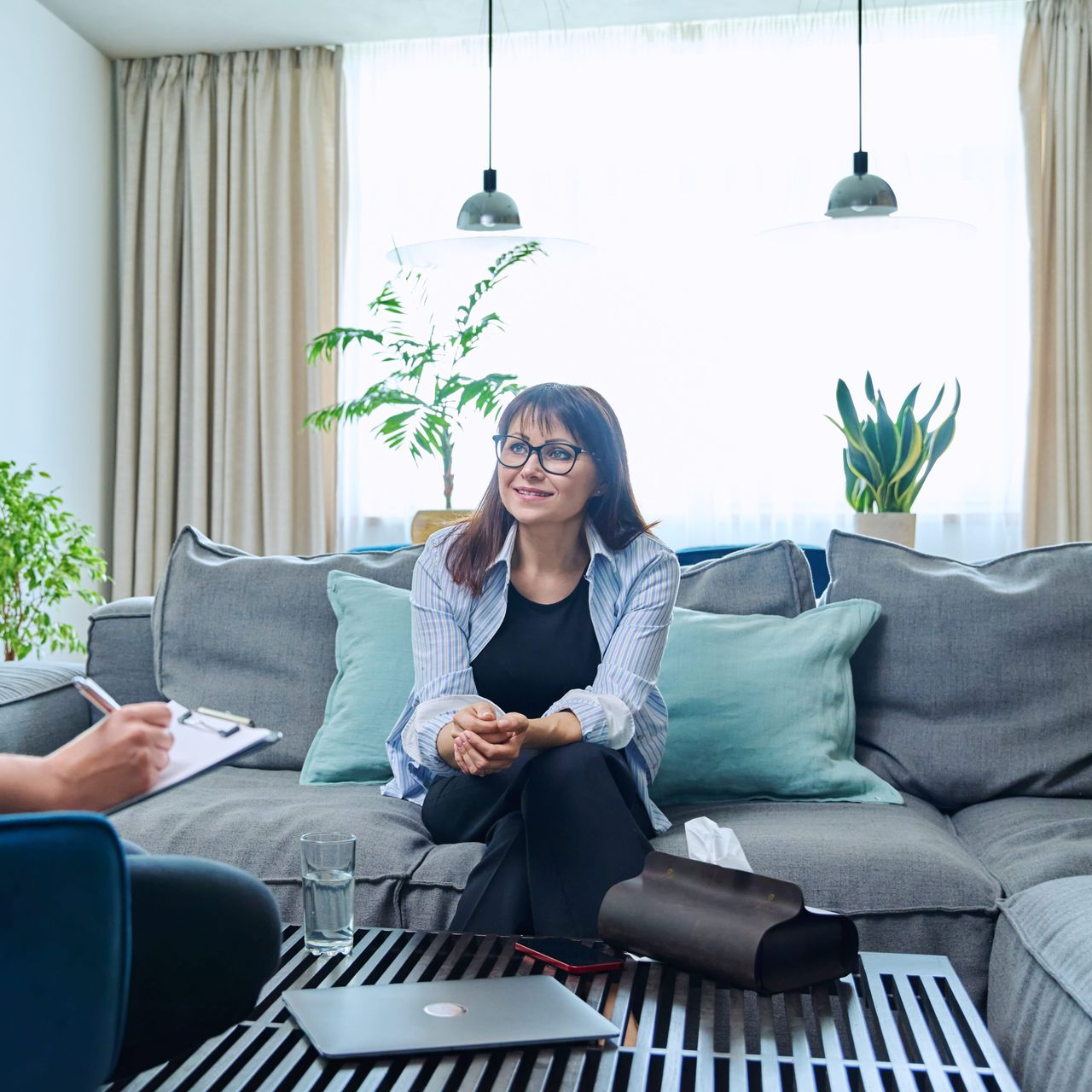
Your first couples therapy session usually starts the same way most first appointments do: introductions, a bit of paperwork, and a conversation about confidentiality, fees, and what to expect from the process. After that, your therapist will typically ask both of you to share a bit of your history together, how you met, what's changed, and what's brought you in now.
You are not expected to have the "right" answers, and you don't need to agree with your partner about what the problem even is. Part of what a first session does is simply create space for both perspectives to be heard, often for the first time in a long while.
This first conversation also sets the stage for identifying specific goals. That might mean better conflict resolution, rebuilding trust after a specific event, or simply understanding why the same argument keeps resurfacing. You don't need to arrive with a polished answer. Naming what feels hard is enough to start, and your therapist will help you both find the words for it if you're struggling.
Who You'll Work With at Grimsby Counselling Centre
Grimsby Counselling Centre is a group practice, and it's worth knowing a little about who's behind the therapy sessions you'll be attending. Our team is led by Jacqueline Boyer, MSW, RSW, who brings 26 years of experience in psychotherapy and holds registration with the Ontario College of Social Workers and Social Service Workers.
Our team also includes Roja Weber, who offers couples counselling alongside Jackie.
Whatever your specific situation, you can expect the same foundation from our team: a collaborative, non-judgmental space, and a therapist trained to work with the dynamics that come up between partners. We're currently accepting new clients, and appointments are available both in-person and virtually.
Starting Therapy: What to Expect Walking In
Starting therapy together is often the hardest part. Once you're in the room, most couples find the anxiety eases faster than they expected. You won't be asked to resolve your biggest conflict in the first session. Instead, your therapist is there to understand the shape of what's going on: the patterns, the history, and what each of you is hoping will change.
It also helps to know that couples therapy doesn't have a fixed number of sessions. Some couples come for a focused round of sessions around one issue. Others use ongoing therapy sessions as a regular, supportive environment to stay connected. Your therapist will talk through what makes sense for your specific goals, whether that's meaningful change on one recurring issue or a broader, healthier relationship overall.
How a Couples Therapist Helps You Feel More Connected
A skilled couples therapist doesn't referee your relationship. Their role is to help you both see the patterns underneath the conflict, the ones that are harder to notice when you're in the middle of them, and to guide you toward feeling more connected instead of more defended.
That often means slowing things down. A disagreement that would normally escalate at home gets paused, unpacked, and understood differently with a therapist in the room. Over time, this therapeutic process is how couples start to interrupt old patterns instead of repeating them, and it's often where real conflict resolution, and an understanding of the root causes behind it, begins.
Evidence-Based Approaches Used in Marriage Counselling
Couples therapy draws on a range of evidence-based approaches. Some therapists use Emotionally Focused Therapy (EFT), which focuses on attachment and emotional bonds. Others draw on the Gottman Method, built from decades of relationship research. Some incorporate elements of Cognitive Behavioural Therapy (CBT) to address unhelpful communication patterns directly, including practical strategies for emotional regulation when conversations get heated.
At Grimsby Counselling Centre, our approach to marriage counselling is rooted in evidence-based methods tailored to what's actually happening in your relationship, rather than a single fixed framework. If your situation calls for something more specific, like clarifying whether to stay together at all, that's a different starting point than standard couples counselling, sometimes called discernment counselling, and it's worth naming that with your therapist early on. If children are also affected by the strain at home, it's also worth mentioning, since family therapy may be worth exploring alongside your couples work.
Improving Communication in Your Therapy Sessions
One of the most common goals couples bring to their first session is improving communication. In practice, that rarely means learning generic scripts. It usually means learning how you specifically communicate, especially under stress, and where that pattern breaks down.
Your therapist may walk you through structured communication strategies and exercises during your therapy sessions that reveal how each of you expresses frustration, shuts down, or escalates when feeling disconnected. Understanding your own pattern, and your partner's, is often the first real shift couples notice, sometimes before anything else has technically "improved," and it's usually the clearest sign you're starting to address the issues underneath the surface conflict.
In-Person or Virtual Couples Counselling Across Ontario
Grimsby Counselling Centre offers both in-person sessions at our Grimsby office and virtual couples counselling across Ontario, including for couples in Stoney Creek, Beamsville, Vineland, St. Catharines, and Hamilton. Neither option is inherently better. Some couples prefer meeting in person; others find it easier to be fully present from home.
If distance, scheduling, or simple preference makes virtual couples counselling a better fit, that's a completely valid way to do this work. What matters most is finding a rhythm that means you'll actually keep the appointments, not just book the first one. Either way, sessions are billed the same, so the choice comes down to what will actually work for your schedule and comfort level, not cost.
Frequently Asked Questions
Will the therapist take sides?
No. A couples therapist's role is to help both of you understand the relationship's patterns, not to decide who's right.
Do we need to talk about everything in the first session?
No. The first session is about pacing, not full disclosure. You'll share what feels relevant, and the rest comes over time.
What if one of us doesn't want to be there?
That's more common than you'd think. A good therapist can work with reluctance, and simply showing up is often enough to start.
How many therapy sessions will we need?
There's no fixed number. It depends on your specific goals, and your therapist will talk through what makes sense as you go.
Can we do individual sessions too, or is it always together?
Many couples therapists, including our team, may recommend an individual session alongside joint sessions when it's useful, depending on what's happening in your relationship.
Is our first appointment covered by insurance?
Coverage depends on your specific plan and whether your therapist is a Registered Social Worker or Registered Psychotherapist. Our team can help you understand what your session may be eligible for.
Do you offer discernment counselling if we're not sure we want to stay together?
That's a different starting point than standard couples counselling, and worth naming when you book so your first session can be structured around that specific goal.
Takeaways and Next Steps
If you've been putting off booking a first couples counselling session because you're not sure what to expect, hopefully this helps. It's a conversation, not a test. You don't need to agree on what's wrong before you walk in, and you don't need to have already tried everything else first.
Whether you're looking for in-person sessions at our Grimsby office or virtual couples counselling across Ontario, our team is here to help you find a starting point that fits your relationship and your goals.
If this feels like the right time, we'd love to talk.
Book a free 15-minute consultation to ask questions and see whether our approach feels right for you and your partner.
Ready to Start Feeling Like Yourself Again?
Book a free 15-minute consultation with our Grimsby counselling team today.
SHARE THIS
Jacqueline Boyer, MSW, RSW
License line: RSW
#835942
· Licensed in Ontario
If you've spent years trying to think your way out of patterns that keep coming back, you're not alone, and you're not broken. I hold a Master of Social Work and have spent 26 years working with adults navigating trauma, anxiety, and the exhausting weight of a nervous system that never fully settled. My approach is warm and collaborative, I won't just help you understand what happened, I'll help your body finally let it go.
Recent Posts