
Deep Brain Reorienting (DBR) Therapy in Grimsby, Hamilton and Across Ontario
A slow, body-based way to work with trauma, for people who have found trauma processing too much, or who sit in session and feel very little at all.

DOES THIS SOUND FAMILIAR?
Trauma Work Either Floods You or Leaves You Blank
Some people come to us after trauma therapy that moved too fast for them. They started working on a memory and were overwhelmed before they could do anything with it. They left sessions shaky and needed days to recover.
Other people have the opposite experience. They can tell the whole story calmly and know it should hurt, but in session they go flat or foggy, and nothing much changes.
Both experiences make sense, and they often come from the same place. When something shocking happens, the body reacts in a split second, before there is time to think or feel. If that first jolt never settled, it can keep shaping how you react today, as flooding or as shutting down. DBR is designed to work with that first jolt, gently and in small steps.
HOW DBR WORKS
How Deep Brain Reorienting Works
Deep Brain Reorienting was developed by Dr. Frank Corrigan, a psychiatrist in Scotland, who first published on it in 2020 and has been training therapists since.
It is based on the idea that our very first response to a shock happens deep in the brain, in the areas that turn us toward something unexpected. That turning, called orienting, often shows up as tension around the eyes, face, head or neck. The emotion comes a moment later.
In a DBR session you bring a difficult moment to mind just long enough to notice that first tension. Then we stay with what your body does next, at the pace of the sensations. You don't have to tell the whole story or go back through it.
Because the work starts before the emotion arrives, many people find they can stay present and grounded. The research on DBR is still early. One of the first trials was done in London, Ontario, and found it a promising and well tolerated treatment for PTSD.

THE TEAM IN YOUR CORNER
Why I Offer Deep Brain Reorienting
I have worked in mental health for 26 years, and EMDR, Flash technique and IFS Parts Work have been at the centre of my practice. I completed Level 2 training in Deep Brain Reorienting because some of the people I work with needed a way in that was even slower and closer to the body.
I offer DBR as its own therapy. You don't need to have done EMDR or any other trauma work first.
Safety still comes first. Before we go near anything difficult, we make sure you feel ready.
I am the only one on our team who offers DBR. When you reach out, we will talk about whether DBR, EMDR or another approach fits what you are carrying.
WHAT MAY SHIFT
What Some Clients Begin to Notice
Change with DBR is often quiet, and people tend to notice it outside the session first.
Staying in the Room
It can get easier to stay present in a hard conversation instead of drifting off or bracing.
Softer With Yourself
Some people find they are less harsh with themselves about what they went through.
How the Sessions Unfold
What to Expect in a DBR Session
My first sessions with you are about getting to know you and helping your body find steady ground. We look at what happens physically when something activates you and what helps you come back. You leave those sessions with something useful whatever comes next.
When we begin DBR, we choose one small piece of an experience to work with. You bring it to mind briefly, notice where your attention goes and the tension that comes with it, and then follow the sensations with me. Many people stay quite still, and some notice their head wants to move a little. We check in often, and you can stop whenever you need to.
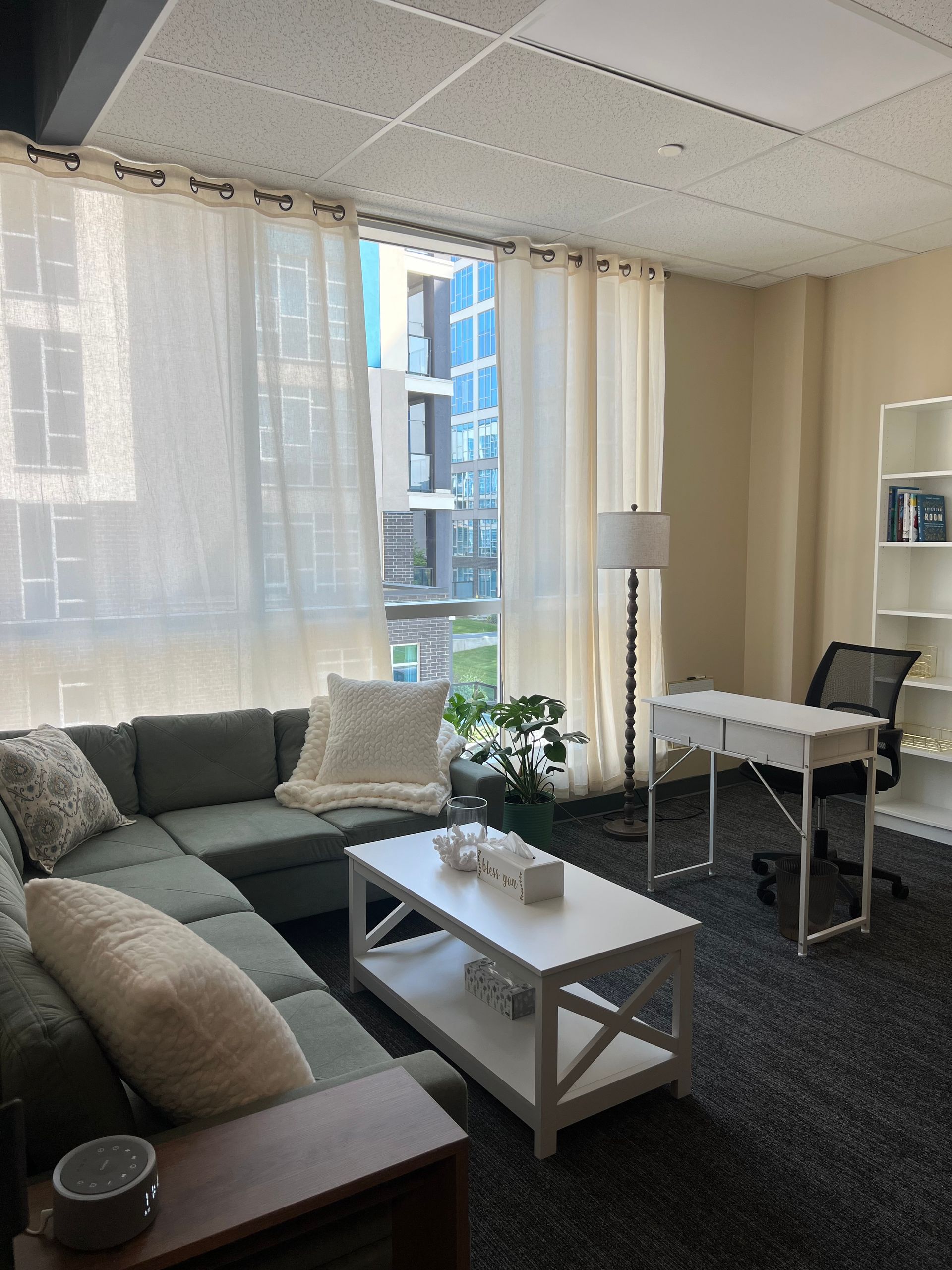
Sessions are 50 minutes. I offer DBR in person in Grimsby, serving Hamilton, St. Catharines and the Niagara region, and online anywhere in Ontario. Our office is near the water and the escarpment, and some people like to arrive early and sit outside first.
Getting Started
How to Start DBR in Grimsby or Online
Here is what happens when you reach out.
Build Steady Ground
We start with safety and regulation, so your body has support before any processing.

IS DBR RIGHT FOR YOU?
Who DBR May Help
- You understand your patterns after years of talk therapy, and your body still reacts first.
- Trauma processing has felt like too much, other therapies haven't helped you feel settled, or you go numb or foggy when you try.
- What you carry goes back to early life or to close relationships, and the memories may be unclear.
- A shock, an accident or a sudden loss still feels close, even years later.
- You want a slower, body-based approach that doesn't ask you to retell everything.
- You would rather not start with talk therapy, and want a place to begin.
DBR isn't the right first step for everyone. On your first call we'll talk honestly about what fits.
WHEN THE SHOCK SETTLES
Feeling at Home in Your Own Body Again
What people want from this work is usually simple. They want to hear a door slam without spending the next hour shaking, or get through a hard conversation and still feel their feet on the floor.
The memory doesn't disappear. Over time it grabs hold of the body less often when something brushes against it.
That is what we mean by moving from fear to joy: being with the people, places and things in your life as they are now, instead of bracing for what happened before.

Common Questions
Questions People Ask Before Starting DBR
What does DBR stand for?
Deep Brain Reorienting. It is a trauma therapy developed by psychiatrist Dr. Frank Corrigan that works with the body's first response to shock, often felt as tension in the face, head and neck, before emotion takes over.
Do I have to talk about what happened?
No. You bring a moment to mind briefly, and the work follows the sensations in your body. You can share as much or as little of the story as you like.
How is DBR different from EMDR?
EMDR uses eye movements or tapping while you hold a memory in mind. DBR uses no eye movements. It follows the orienting tension and the sensations that come before the emotion. I offer DBR as a separate therapy from EMDR. In my experience, DBR is often a gentler way in than EMDR, because we go slowly and you don't have to retell what happened.
Is DBR legit?
It's a newer therapy, so that's a fair question. DBR was developed by a psychiatrist, and the first randomized trial, run out of London, Ontario, found it promising and well tolerated for PTSD. The research is still growing, and I'll always be honest with you about what it can and can't do.
Is DBR okay if I tend to dissociate or get overwhelmed?
DBR was designed to lower the risk of overwhelm and dissociation during processing, and we go slowly and check in often. If dissociation is a big part of your experience, we'll talk about pacing and where it makes sense to start.
Can I do DBR online?
Yes. I offer DBR online anywhere in Ontario, as well as in person in Grimsby. The first research trial on DBR was done entirely by video.
Are there side effects?
Some people feel tired, tender or more emotional for a day or so after a session, the way you might after a good cry. It usually settles quickly. We go at a pace your body can handle, and we talk about what to expect before we begin.
Is DBR evidence-based?
DBR is newer than EMDR, and the research is still growing. An early randomized trial in Ontario found it promising and well tolerated for PTSD, and more studies are underway.
READY TO BEGIN?
Start With a 15-Minute Call
You don't need to know whether DBR is the right fit before you reach out. That is what the call is for. It's free, there's no commitment, and you can ask whatever you need to.