People who start looking into therapy for the condition often come across ERP early on. Many of the explanations online assume you already know what it involves, so a common question is what it looks like in practice.
The short answer is that exposure and response prevention is the first-line treatment for OCD. This guide explains what it involves, what the research says, and what to expect in sessions, based on how our team at Grimsby Counselling Centre works with people in Grimsby, Ontario.
We start with what the therapy is and how it works, then cover the research, what sessions involve, and how it differs from general exposure therapy. If you’re deciding whether to try it, you’ll have a clearer sense by the end.
What Is ERP Therapy? Exposure and Response Prevention Explained
Exposure and response prevention, usually shortened to ERP, is a type of exposure therapy designed for obsessive-compulsive disorder. The International OCD Foundation (IOCDF) describes it as a form of
cognitive behavioral therapy, or CBT, and as the first-line psychological treatment. You may also see it called exposure and ritual prevention. The name changes, and the approach stays the same.
The
National Institute of Mental Health describes OCD as a mental health condition built around recurring thoughts, called obsessions, and repetitive behaviours, called compulsions. ERP is a structured form of psychotherapy, and in the treatment of OCD it works on how those two pieces feed each other. A person faces a trigger, which is the exposure, and chooses not to carry out the ritual, which is the response prevention.
How ERP for OCD Helps Break the Cycle of Intrusive Thoughts
OCD works as a cycle. An obsession shows up as an intrusive thought, anxiety levels rise, and a compulsion follows because it brings relief. Avoiding the trigger may reduce anxiety for a moment. The relief is short, and the brain learns that the ritual was necessary, so the emotional response to the next thought is stronger. Over time the compulsion, along with the avoidance that goes with it, takes up more of the day.
This approach interrupts that loop at the point where the ritual usually happens. When a person stays with the discomfort and doesn’t do the compulsion, the fear response tends to settle on its own. The brain gets new information: the feared outcome didn’t happen, and the distress passed anyway. Many people find that this changes how the original thought lands, even when the thought still shows up. If your thoughts centre on causing harm, our post on
harm OCD looks at that pattern in detail.
Is ERP Evidence-Based? What the Research Says About ERP Treatment
IOCDF calls ERP the first-line psychological treatment because of its very strong evidence base. Its summary of the research on the treatment of obsessive-compulsive disorder reports that, on average, people see about a 60 percent reduction in symptoms. A typical course runs 12 to 20 sessions and can be adjusted to the person.
The same page also lists the limits. ERP is not effective for everyone, and it only works when the person is willing to try it. Severe depression can interfere with treatment, which is one reason a good assessment looks at your mood and other health conditions before exposure work begins. Research on the efficacy of ERP is strong, and it still doesn’t promise a particular result for any one person.
How Exposure and Response Prevention Therapy Targets OCD Symptoms
The condition shows up in many forms. Common obsessions include fears about contamination, harm and symmetry. Obsessive thoughts can also take the form of unwanted thoughts that go against a person’s values. Common compulsive rituals include washing, checking, counting and mentally reviewing a conversation.
The work is built around your own pattern. The plan for someone who checks the stove will look different from the plan for someone who replays conversations in their head. Individuals with OCD often have more than one theme at once, and exposure work can be used to treat OCD across these forms. IOCDF recommends it for most people, including those who take medication.
What Happens in ERP Sessions With an ERP Therapist
We don’t begin with exposure. The first sessions are about understanding your obsessions and compulsions: what they look like, which ones are mental and so hard for anyone else to see, what you avoid, and how much time it all takes. From there we develop a personalized treatment plan together.
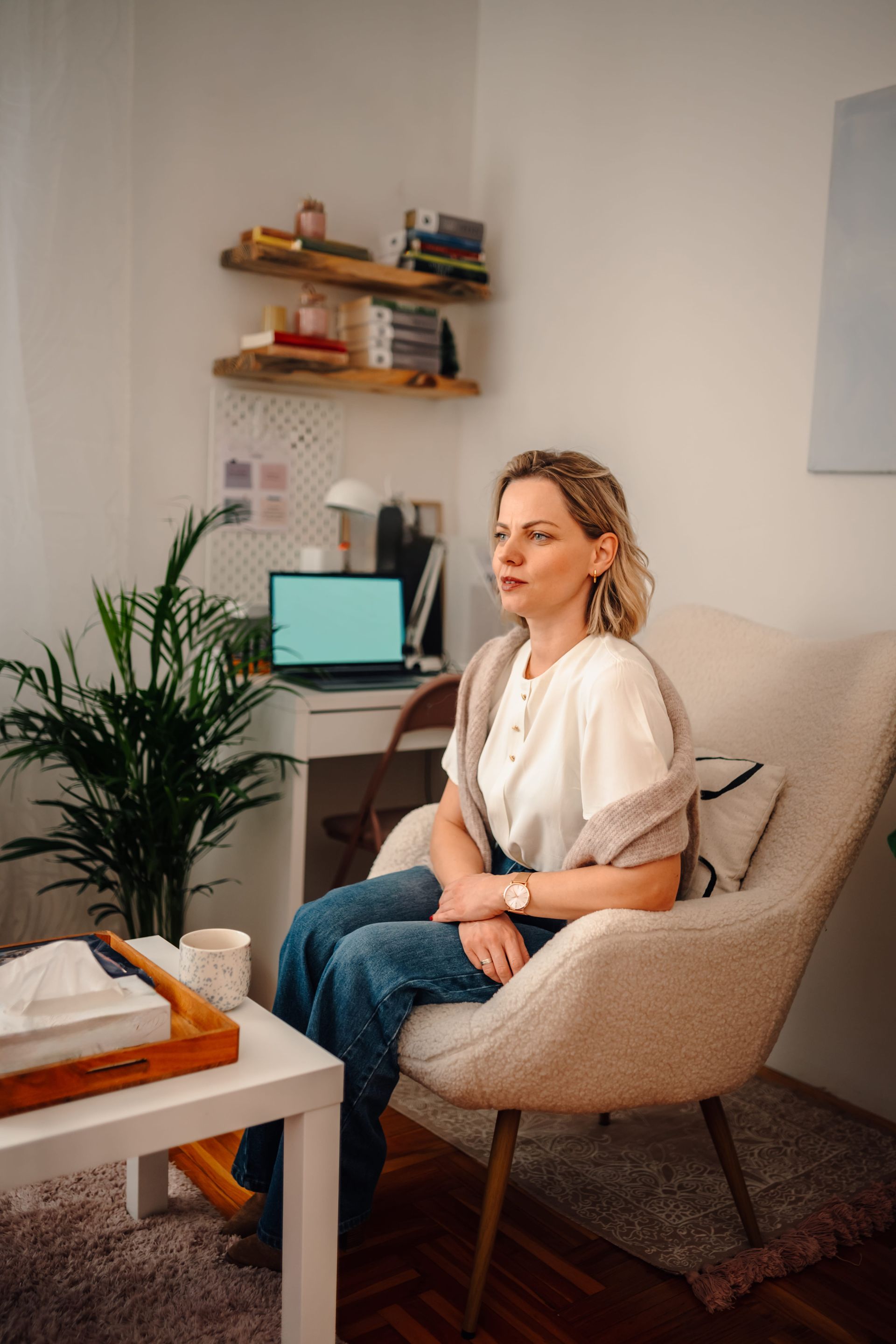
The centre of that plan is a fear hierarchy, a ranked list of triggers from easier to harder. You and your therapist agree on each step before it happens, and you set the pace, even when the step involves distressing situations. Exposure may involve a real situation, sometimes called in vivo exposure, or imaginal exposure, where you work with a feared thought or image in words. Between sessions you practise ERP exercises on your own, because the learning happens in daily life. Our sessions are 50 minutes, and the work can also be done through online therapy anywhere in Ontario.
How Exposure Therapy for Anxiety Disorders Differs From Exposure Response Prevention
General exposure therapy is used for phobias and other anxiety disorders, including generalized anxiety and panic. A person gradually faces what they fear until it loses some of its charge.
ERP adds the response prevention piece. The compulsion keeps the cycle going, so the work targets the ritual as well as the feared stimulus. Other forms of cognitive-behavioural therapy focus on examining and challenging thoughts. With obsessions, that can sometimes turn into one more way of seeking reassurance, which is why this approach puts its attention on behaviour. It is also why a trained therapist matters, since the work needs to be paced and planned carefully.
What If ERP Feels Like Too Much?
A common worry is that treatment means facing the worst fear on the first day. In practice, exposure is graded, and every step is agreed on in advance. You can slow down or pause at any point.
If a step feels too big, we break it into smaller ones. Some people may also find mindfulness techniques helpful for noticing an urge without acting on it, and these can sit alongside the main work. A complete plan includes relapse prevention, so you know what to do if symptoms return. Questions about medication, such as selective serotonin reuptake inhibitors, belong with your family doctor or psychiatrist. IOCDF notes that you can do this therapy while taking medication.
Getting Ready for Treatment and What Progress Can Look Like
Before a first session, it helps to jot down what you notice: the thoughts that come up, what you do in response, what you avoid, and roughly how much time it takes in a day. It doesn’t need to be organized. We go through it together, and the notes give us a starting point.
Progress in this work tends to be gradual. Early on, many people notice that they can pause a little longer before doing a ritual. Over time, exposure steps that once felt out of reach may feel manageable, and the anxiety symptoms that come with them may ease. Some people find the thoughts still show up but carry less weight. Everyone moves at a different pace, and symptoms may flare during stressful periods, so we plan for that from the start.
Finding OCD Counselling and ERP in Grimsby, Ontario
At our practice, exposure work is the main approach we use for OCD. We meet people in person at our office at 13 Windward Drive in Grimsby, and online across Ontario. You can read more about how we work on our
OCD therapy page.
If you’re comparing options, it is reasonable to ask any provider how they use exposure, how they pace it, and how they handle your questions along the way.
Frequently Asked Questions
What does ERP stand for?
ERP stands for exposure and response prevention. It is a structured therapy for obsessive compulsive disorder that combines gradual exposure to triggers with resisting the urge to do a compulsion.
How long does treatment take?
IOCDF describes a typical course as 12 to 20 sessions, adjusted to the person. Some people need fewer sessions and some need more.
Will ERP make my anxiety worse?
Anxiety may rise during an exposure, because that is part of how the brain learns. Each step is agreed on in advance, so you are not facing more than you have agreed to.
Can OCD be treated in a group?
Some clinics offer group therapy for this condition. Our work is individual sessions, in person or online.
Can I do exposure work while taking medication?
Yes. IOCDF notes that you can do this therapy while taking medication. Decisions about medication are best made with your doctor.
Takeaways and Next Steps
Exposure and response prevention is the first-line psychological treatment, and it works by facing triggers while resisting the compulsion. The pace is set with you, and progress tends to be gradual. Managing OCD over the long term takes practice between sessions, and the plan can change as you go.
If you’re weighing where to begin, a free 15-minute call is a good place to start. You’ll get a chance to ask your questions, and we’ll get a sense of what you’re looking for. You can
book your free consultation or call us at 365-384-4325.